
Namibian people
About 3.2 million people share the vast spaces of Namibia, the country has one of the lowest population densities in the world with 1.5 people per square kilometre. It is thought that only about a quarter of Namibians live in urban areas, although this figure is certainly increasing as growing numbers of unemployed people leave their villages and farms.
The population of Namibia is not evenly distributed with about 60% of people living in the northern regions, while the southern and coastal areas are almost unpopulated. Namibia's population can be divided into (at least) 11 ethnic groups, the biggest group of which is the Owambo people. As a country Namibia is still trying to find a national identity, but each of the country's cultural groups has its own rich heritage and traditions. Due to the unfortunate apartheid history of Namibia the division of people into cultural or tribal groups is an extremely sensitive issue, and most people prefer to think of themselves as Namibians.

The Aawambo People
The Aawambo is by far the largest population group in Namibia, comprising about one third of the countries total population.

The Kavango People
The Kavango River in north eastern Namibia forms part of the border between Namibia and Angola and also serves as the focal point of the Kavango people.
.jpg)
The Herero People
The Herero people of Namibia are a pastoral cattle breeding nation. it is believed they migrated from the east African lakes arriving in Namibia about 350 years ago.
.jpg)
The Himba People
The Himba are a tribe of nomadic pastoralists who inhabit the Kaokoland area of Namibia.

The Zambezi People
About 100 000 Caprivians live in north eastern Namibia along the Kwando and Zambezi rivers in the Caprivi Strip.

The Damara People
Making up about 7–10% of the population. They mainly live in Erongo, Kunene, and Khomas regions. Their livelihoods include farming, mining, tourism, and urban work

The Topnaar People
The Topnaar are technically a branch of the Nama people. They live in the the western central Namib along the Kuiseb River in the area around the Walvis Bay.

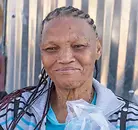
The Rehoboth Baster People
About 55 000 basters live in Namibia, they are the offspring of Nama and Dutch Settlers. these children were called coloured or basters.
-1.webp)
The Coloured People
Namibia's Coloured community has its roots in the Cape Province of South Africa.

The Bushman & San People
There are approximately 27 000 San in Namibia. The San have inhabited Southern Africa for at least 30 000 years.

The Tswana People
There are only about 6000 Tswana people in Namibia, making them the smallest cultural group.

Namibians of European Descent
There are about 75 000 Namibians of European descent, approximately two thirds of these speak Afrikaans, one quarter German and most of the rest English and a few speak Portuguese.
History & Background
Namibia’s population reflects its history, including:
-
Indigenous settlement for thousands of years
-
Colonization by Germany (1884–1915)
-
Administration by South Africa
-
Independence in 1990 after a long liberation struggle
Population
Namibia has a relatively small population (about 2.5 million people), with a mix of urban and rural communities. Major cities include:
-
Windhoek (capital)
-
Walvis Bay
-
Swakopmund